
The 4 Returns Framework in Practice
A guidebook for holistic landscape restoration

Unpacking the 4 Returns
In this chapter
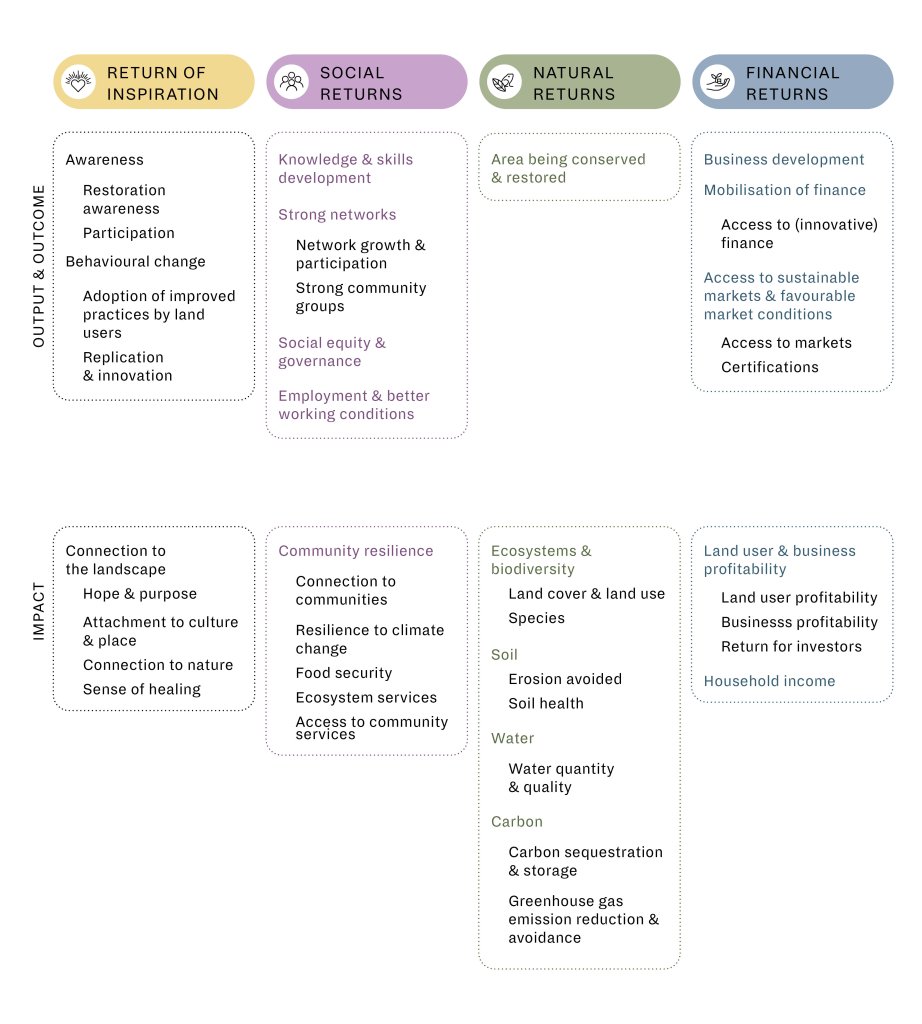
- For each of the 4 Returns, themes can be distinguished.
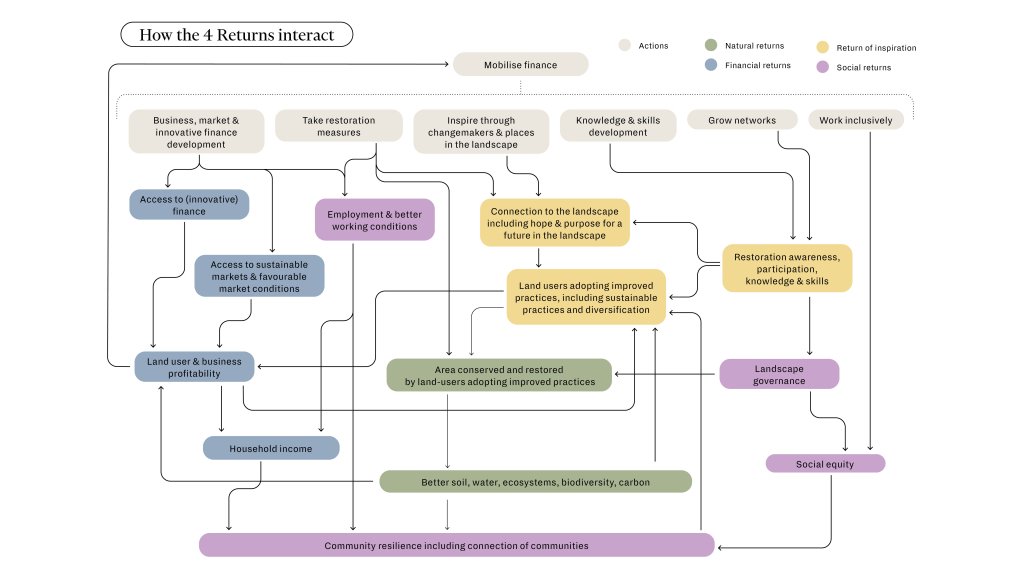
- The returns interact with each other and strengthen each other. The interaction map on page 33 shows these interactions.
- The themes of the return of inspiration are awareness, behavioral change, and connection to the landscape.
- The themes of social returns are knowledge and skills development, strong networks, social equity and governance, employment and better working conditions, and community resilience.
- The themes of natural returns are: area being conserved and restored, ecosystems and biodiversity, soil, water, and carbon.
- The themes of financial returns are business development, mobilisation of finance, access to sustainable markets and favourable market conditions, land user and business profitability, and household income.
Through holistic landscape restoration, we can transform the four major losses resulting from landscape degradation into the 4 Returns resulting from a healthy landscape and thriving community. This is possible in any landscape around the world. How it is achieved, however, depends on context. It can be challenging to know where to focus your action and how to measure results. This chapter breaks down each return and shows how they interact. Inspirational stories from diverse landscapes bring the theory to life. Note that most of the stories in this chapter were shared by Commonland’s partners in 2022. With each subsequent cycle of impact reporting, we build our knowledge.
Based on real experience
We have identified the themes of each of the 4 Returns based on interviews with 4 Returns landscape restoration practitioners in 2023. The table below shows an overview of the themes and sub-themes, and they are explained further in this chapter. The chapter Monitoring the 4 Returns [page 282] details how to monitor these themes.
In the table below, “output and outcome” refer to themes where a practitioner has a direct effect. “Impact” is a practitioner’s ultimate aim, but here, external factors come into play too.
A web of the effects
Looking at all the possible themes, a landscape restoration practitioners may start anywhere by setting up businesses, doing restoration work in the landscape, or inspiring land users to change their behaviour. But the real magic happens when activities are combined because the different returns interact and strengthen each other. By working holistically, the whole impact will be greater than the sum of its parts. So, instead of focusing on the effect of one theme, we need to look at the interactions between them all.
"The different returns strengthen each other. By working holistically, the whole impact will be greater than the sum of its parts."
Simplifying the interactions between the 4 Returns and with the activities of practitioners can help us understand how change occurs in a landscape and how working towards different returns should enhance landscape impact.The interaction map shows how different aspects of each return interact. Please note that this map of interaction simplifies the reality on the ground. There are many other factors that influence the landscape, and there are many assumptions that are not explicit in the map. The value of the map, however, is that it allows us to imagine how the 4 Returns strengthen each other and how holistic work is different from focusing on just one or two issues.
How to read the interaction map
The grey blocks categorise any activity that a practitioner could implement in the landscape. From each activity, arrows lead to different blocks reflecting the themes. The themes also interact with each other. You also see feedback loops. The most important feedback loop is when positive effects occur on any return in the landscape. This motivates land users to adopt improved practices.
Each arrow represents an assumption about how we expect change to happen. Following the arrows reveals a possible pathway to impact, for example: restoration work can create jobs that increase household incomes. This should improve household resilience, also increasing the resilience of communities facing adverse events. In a more resilient communities, we assume that land users would be more likely to appreciate the benefits of sustainable practices and adopt them on their land. Land managed with improved practices will strengthen natural returns, making both the landscape and the community more resilient. This feedback loop shows how each restoration activity can lead to replication, multiplying its effects.
Return of inspiration
When a landscape is degraded, people may stop noticing its beauty, lose pride in their roots, lose their connection to nature, and stop caring for the land. Place and culture are important parts of many people’s identity, so identifying with a landscape that is being degraded can cause distress and even loss of identity.
Landscape restoration initiatives can help bring back a sense of hope and pride to local communities. The 4 Returns Framework is set apart from other approaches to landscape restoration by the inclusion of inspiration. It may also be the return that is most elusive or difficult to explain.
What is inspiration? Linguistically, inspiration relates to our connection to the spirit (inspire, spirit, and spiritual come from the same linguistic stem). The Oxford Dictionary defines inspiration on an individual level as “the process of being mentally stimulated to do or feel something, especially to do something creative”. It’s personal but it is something everyone can experience and so it is also universal.
The return of inspiration can take the form of:
- Individual inspiration. People stimulated to do something with a deep motivation, sparking creativity to take on something new
- Collective inspiration. A group of people experiencing inspiration, creating a collective vision, and being committed to act on this
Both individual and collective inspiration create psychological effects, such as a sense of connection to the landscape, purpose, hope, place, cultural attachment, meaningfulness, and healing.
In the context of holistic landscape restoration, we define the return of inspiration as an increased connection to the landscape, motivating stewardship .
"Inspiration has a personal component (to be inspired inside, inspired to do something creative) but it can also happen at the community level (we can inspire each other as a group or as an organisation). So, the very first question to ask ourselves is: What inspires me?"
Astrid Vargas, Founder, Inspiration4Action, and Founding member, AlVelAl
Breaking it down
Inspiration starts with awareness, or: knowing, perceiving, and being cognisant of something. This can be caused by sources of inspiration — places or people in the landscape which show that things can be done differently. They might embody cultural inspiration, including spiritual traditions such as honouring sacred places, holy trees, or rituals. In other cases, communication and organised events lead to restoration awareness and participation. Restoration awareness is essentially about individual and communal awareness of the whole, provoking a holistic approach to landscape restoration.
Landscape story: Awareness
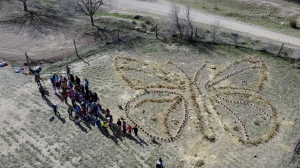
In the Altiplano Estepario landscape in Spain, Inspiration 4 Action develops inspirational approaches through co-creation, collective leadership, art, and creative bottom-up initiatives. Its film, Head, Heart, and Hands, which features voices of local changemakers, offers practical solutions to desertification and the decline of life in their landscape. Another project is comprised of large regenerative sculptures made from plants, which beautify the landscape, serve as an educational resource, restore the ecosystem, and, when planted in the community, strengthen the bonds between people. One example is AlVelAl 8000, which covers the area of three football pitches, and reproduces 8,000-year-old cave art in living form. Another is made of large hedgerows of aromatic plants arranged in the shape of a butterfly to feed butterflies. The sculptures are planned and planted by a group of organisations, Inspiration 4 Action, A Regenerar, the Alliance for Regenerative Education, and local schools and municipalities.
Another theme of the return of inspiration — connection to the landscape — is about the relationships people gain with the landscape, other people, and nature. These improve people’s well-being (see “benefits of inspiration” above). Connection to the landscape increases people’s motivation to care for it and to adopt better practices. Subthemes of connection are:
- Inspired people feeling hope and purpose for the landscape again, and seeing a future for themselves in the landscape
- Greater attachment to the landscape and the culture, as well as a sense of pride in it
- A strenghtened connection to nature that leads to individuals absorbing nature as part of their identity (source).
- A sense of healing which is experienced as improved mental or physical health due to restoration
Landscape story: Connection to the landscape
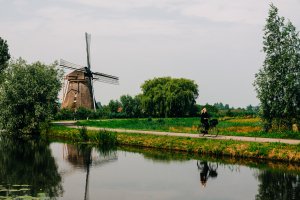
In the Dutch Peat Meadows in the Netherlands, Wij.land has set up the Inspiration Route. This cycle route connects people with the Peat Meadow landscape and its farmers by combining art, knowledge, and technology. The route guides cyclists to pioneering farms, farm shops, a bird-watching spot, and beautiful meadows, helping them reflect on the diverse ways in which they are connected to the landscape. Art installations can be seen along the way. There is also a connected soundscape and digital version of the route. Learn more here.
A greater connection to the landscape and increased motivation to care for it, leads to the adoption of improved practices. This theme of the return of inspiration sees people changing the way they use land because of the environmental impact. Their practices or innovations are replicated by others in the landscape when they see the benefits over time.
Landscape story: Land users adopting improved practices
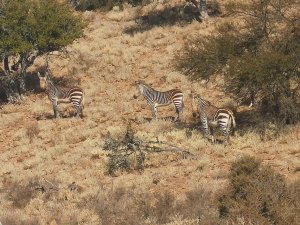
The Cape mountain zebra is the smallest of the zebra species. Known locally as quagga, the zebra is geographically restricted to the western and eastern Cape provinces in South Africa, but the species was driven to near extinction in the early 1900s. The last herd of quagga was removed from Baviaanskloof in 1972 to “pool” genetic resources in the Mountain Zebra National Park. In 2019, quagga were reintroduced to the Baviaanskloof Conservancy where private landowners work together to conserve the area’s ecological heritage.
Landscape story: Replication
In the Kabirdham landscape in Chhattisgarh, seven partners — Samerth Charitable Trust, Chhattisgarh Agricon Samiti, PRADAN, Foundation for Ecological Security, The Nature Conservancy India, the Network of Conserving Central India, and Commonland— are working towards empowering smallholders and Indigenous communities. After taking part in an educational trip, a community member, Ramata Baiga, mobilised people back in his village, Kabri Pathra, to extinguish a forest fire. This success led community members to create a fire management plan in which they would be involved in preventing any future fires from getting out of control, which is a concern during the summer. Learn more here.
"Small steps of action together make one big step. These are reinforced by the inspiration of seeing the results halfway through already, seeing them with your neighbours, and evaluating that along the way. We find that very powerful."
Lotte Duursma, Community & inspiration, Wij.land
Learn more
- According to the paper Building bridges for inspired action: On landscape restoration and social alliances, published in 2023 in the journal Ecological Solutions and Evidence, not enough consideration is given to stakeholder engagement in landscape restoration. The paper offers insights on building social alliances based on the work of AlVelAl in Spain.
- Read about our learnings, as AlVelAl, Wij.land, RegenWA, Wide Open Agriculture, Living Lands, and Grounded reflected on ten years of working on the return of inspiration, in the story 5 Basic Ingredients for Return of Inspiration in Landscape Restoration by Willemijn de Iongh.
- Measuring the Return of Inspiration by Milena Engel introduces the Inspiration Pilot, Commonland’s research project to answer fundamental questions about the return of inspiration.
Social returns
Our well-being is tied to that of our planet. Where ecosystems degrade, communities become vulnerable to extreme weather events, directly or indirectly affecting people’s livelihoods. But where ecosystems thrive, communities thrive. So, restoration initiatives can only be successful when people also see improvements to their own lives alongside improvements to their landscapes.
We define social return as strengthening communities in landscapes by increasing livelihood opportunities (for example, jobs), community engagement, and social resilience. Social return, as with the return of inspiration, affects individuals and the whole community.
Breaking it down
The ultimate social return is community resilience — the sustained ability of a community to use and interact with available resources in order to prepare for, respond to, withstand, adapt, and recover from adverse situations (Bosher & Ksenia, 2017). Community can mean different things in different landscapes. For some landscapes, it means specific groups, for others it can be a whole village.
Community resilience has five subthemes, and we assume that when these improve, community resilience also improves. They are:
- Connection of communities. Trust and familiarity among people
- Resilience to climate change. Increased ability of the community to tackle issues caused by climate change, making community members more resilient, self-sustaining, and autonomous
- Food security. Everyone in the community always has physical and economic access to sufficient safe and nutritious food, that meets their dietary needs and food preferences, for an active and healthy life (World Food Summit, 1996).
- Improved ecosystem services. Benefits provided by nature, for example, fresh water (categorised as provisioning), mangroves as a buffer for storms (regulating), and lakes used for cultural events (cultural services)
- Access to community services. These are services that are not linked to the natural environment, but that indirectly support the cause of the landscape action plan, such as housing, electricity, waste management, infrastructure, healthcare, education, and sanitation
Landscape story: Connection of communities
A machinery bank was launched in the Altiplano Estepario landscape in Spain in 2022 with the support of Fund De Roeper. Using the bank’s machinery saves farmers money and allows them to employ new techniques, such as clearing green cover, shredding pruning waste, and adding organic matter. The bank is attracting new members to the AlVelAl farmer’s association, allowing it to reach more traditional farmers for the first time. AlVelAl can spread awareness of regenerative practices. Meetings at which farmers discussed how to manage the bank created more interaction and cooperation. Watch this video to learn more.
Other themes connected to social returns are about working towards community resilience where a practitioner has a direct effect (see the “output and outcome” level of the themes and subthemes of the 4 Returns graphic). Knowledge and skills development helps to strengthen the abilities of individual community members in activities, such as nature restoration and regenerative farming practices.
In line with this, strong networks are about maintaining, stimulating, creating, or facilitating learning or business networks related to regenerative or improved practices of restoration. It is also about participation in these networks, and whether they consist of interconnected and engaged people. We also consider the added value these networks have to strong community groups if, for example, they are trusted and support them with tools, trainings, or financial resources.
Employment and better working conditions are also an indicator of social return. Jobs could be counted as a financial return because they provide incomes to individuals, strengthening their economic position. However, providing jobs also has a profound effect on communities because livelihood opportunities build people’s resilience, knowledge, and skills, and contribute to self-esteem. So, while income is captured under financial return, employment is best positioned under social return.
Landscape story: Build networks
Wij.land works with social entrepreneurs in the Dutch Peat Meadow landscape, focusing on land rehabilitation. Currently, 18 entrepreneurial businesses are part of the network. Wij.land organised six business-focused events after which five of the 86 participants received funding to scale up their activities. The funding total was €42,500. The network offers entrepreneurs opportunities to learn from each other, and Wij.land hopes it will develop the market for regenerative products. Last year, one of the entrepreneurs, Grutto, an online consumer platform for regenerative meat products, organised an information day for start-ups, who learned about setting up regenerative businesses and participating in fair markets.
Landscape story: Employment and better working conditions
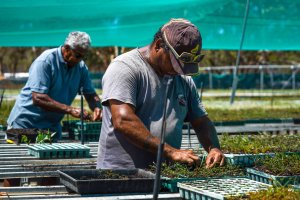
The Boola Boornap Nursery in Southwest Australia supplied 750,000 seedlings to the carbon industry and land restoration projects in 2022. The nursery employs 25 Indigenous and non-Indigenous Australians, some of whom have had limited employment in the past. Flexible hours allow the workers to fulfil cultural and familial obligations. The nursery offers a good working environment with a friendly atmosphere.
Landscape restoration practitioners ensure social equity by organising activities that are inclusive and initiatives with diverse representation. They consider whether women, young people, and Indigenous Peoples have an equal voice in decision-making in the community, and check that the benefits of restoration activities are distributed fairly. For example, does the revenue from carbon credits generated by local people go to community members? For holistic landscape restoration to be effective, social equity and inclusive governance are important, partly because Indigenous Peoples have extensive knowledge of sustainable ecosystem management practices. Related to this, landscape governance means having a supportive governance structure that enables natural capital to flourish. This includes secured tenure rights to land, a land use plan, or a coherent policy and legal framework supporting conservation and restoration development across sectors. It is also about improved transparency, responsibility, accountability, and inclusive design and participation.
Landscape story: Social equity
Danjoo Koorliny (DK) is a large-scale, long-term, systems-change project created by Indigenous Australian elders and leaders as we move towards 2029 (200 years of colonisation in Perth). The project brings people together in Noongar country, throughout Western Australia, nationally, and around the world. DK’s annual highlight is a festival to celebrate Aboriginal culture. In 2022, there were more than 700 participants, including many non-Indigenous Australian people and government representatives. As a result, the government is developing better relationships with the Indigenous Australian community, and members are more involved in developing policies. DK partners with the Department of Water and Environmental Regulation to plan better management of water. It is also involved in reconciliation initiatives with many government departments, bringing a deeper Aboriginal perspective to issues that affect community and society.
Natural returns
Natural returns are defined as healthier ecosystems, most notably soil, water, and biodiversity. The health of an ecosystem relates to how resilient it is to shocks. According to UN 2030 Sustainable Development Goals (SDGs), a resilient landscape can sustain the desired ecological functions under changing conditions and despite multiple stressors and uncertainties. All life on Earth benefits from natural returns, but because humans are well served by the other returns, the focus of this return is on flora and fauna.
Breaking it down
Natural returns starts with landscape stakeholders, notably land users, changing their practices. It requires inspired land users to embrace improved practices, or the inspiration of stakeholders in the enabling environment, for example policymakers who adopt policies that serve landscape restoration better.
The first theme of natural return is the area being conserved & restored by inspired land users, which includes:
- The area becomes (better) conserved and protected so that less land degradation can take place
- More restoration measures are taken in natural areas, or more land becomes a natural area
- Land used for agriculture is managed more sustainably, according to (part of) the principles of regenerative agriculture, so land moves from the economic zone to the combined zone
After the conservation and restoration process has begun in an area, we expect different ecological effects to make an impact at a landscape scale. In the table above, ecosystems and biodiversity refer to the status of ecosystems and species in a landscape. This addresses the types of ecosystem present and whether quality is improving or maintained. These include wetlands, vegetation cover, and diversity of species. Wetlands merit specific attention because they connect different zones in a landscape through water flows above and below ground. Healthy wetlands are high in carbon and biodiversity, can buffer water in times of flooding, and release water during drought.
Other factors of natural return — soil, water, and carbon — can differ between landscapes and even sites within a landscape. Soil is defined as the ability to sustain the productivity, diversity, and environmental services of terrestrial ecosystems (Adopted from The Intergovernmental Technical Panel on Soils (ITPS) of FAO Global Soil Partnership). Its sub themes are:
- Avoided erosion. Avoiding the sealing, crusting, and compaction of soil
- Soil health. The same definition of soil (above), including organic matter, infiltration and permeability, and diversity of soil organisms
Water is defined as the capacity of a population to safeguard sustainable access to enough water of good quality for the preservation of humans and nature (UN water). The quality of water is measured by the presence and sources of pollution.
Carbon is distinguished between carbon sequestration and storage in soils and vegetation, and the reduction and avoidance of carbon emissions. It has strong links to other subthemes, such as vegetation growth and soil organic matter. Find examples of carbon sequestration and emission reduction in the chapter Carbon finance.
Landscape story: Area being restored
It may seem counterintuitive, but in the Langkloof landscape in South Africa, Living Lands is removing trees rather than planting them. Plant species from other continents that were introduced in the 19th or 20th centuries have spread across the landscape. Eucalypts, black wattle, and pine species have taken hold in the fynbos (healthland) ecosystem, dominating and outcompeting native species. Because they are fast-growing, their intensive water use dries out the land, causing further ecosystem damage. Clearing invasive alien species is labour-intensive and requires an understanding of the local ecosystem. The thickest patches are often hard to reach by vehicle. Alien plants are often cleared by chopping and applying herbicide, or by a controlled burn. Other methods are bio-control — introducing targeted diseases or fungi, or intensive grazers such as goats. Having a locally applicable farm management plan and updating it over time is important, particularly due to unwanted new growth. As alien invasive species are cleared, indigenous vegetation is slowly coming back.
Landscape story: Biodiversity
In Chhattisgarh, India, a seed ball festival saw 8,000 seed balls dispersed to increase vegetation cover into the forest. The festival, in 2022, was started locally and coordinated by Samerth. Participants, including schoolchildren, collected and dried herb and tree seeds, and threw the seed balls back in the forest. Germination of seeds was 65%, but due to cattle and competition with invasive species, 35% survived. The festival was repeated in 2023.
Landscape story: Area being restored
Wij.land’s work to enable and mobilise farmers in the Dutch Peat Meadows has resulted in a total of 2,338 hectares under improved management since the project began in 2016. These hectares include the land on which the 188 farmers pilot regenerative practices. They also comprise land used for projects experimenting with worm compost tea (a tea made of vermicompost that is rich in beneficial microbes), manure quality, and alternative grazing regimes. Wij.land, together with NIOO (Dutch Institute for Ecological Research), monitors the impact on the land under soil improvement measures to investigate whether the expert advice leads to improved soil quality. Initial results are promising, showing increases in fungi and bacterial communities. However, measuring this kind of success and interpreting such data remains a challenge. There is a need for simpler soil analyses.
Financial returns
We define financial return as long-term economic resilience and prosperity for communities and businesses.
Economic prosperity comes from more income and financial value for stakeholders in a landscape, including community members and farmers, businesses and investors. From a business perspective, income is determined by costs and benefits and therefore profitability. From a household perspective, this is income versus expenses.
Financial returns need to be viewed in the long term, especially at the beginning. When starting holistic landscape restoration, it takes time and investment before the returns are generated and positive cash flows can be identified. For example, setting up new businesses and creating markets can be challenging and time-consuming. Farmers who are transitioning to regenerative production must invest in their soil and practices before gaining a return.
Learn more about the importance of long-term, trust-based landscape finance in the chapter, Landscape Finance.
Breaking it down
Financial return impacts household income. This reflects the financial gain for households, communities, and land users — such as farmers, foresters, fishers, the tourism sector — that is due to restoration, and regenerative, sustainable practices. The income can follow from job creation, linked to social return, or profitability.
Land user and business profitability is another impact of financial return. It relates to business size, costs, and revenue. We distinguish profitability for three types of stakeholders:
- Land users. Farmers, foresters, fishers, the tourism sector, other land use practitioners
- Other businesses in the landscape further down the value chain (not land users) and value chains developed from regenerative practices
- Investors
Business profitability is not often the first impact seen in the landscape. It follows successful business development and access to sustainable markets & favourable market conditions. Business development is about developing, testing, and investing in ventures, either within an existing business or as a new enterprise.
Landscape story: Business development
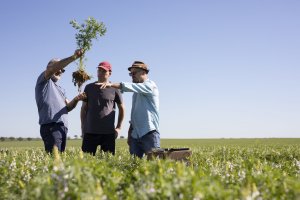
Wide Open Agriculture (WOA) in Australia is piloting the sweet lupin protein isolate called Buntine Protein®. The lupins that are used to produce this new product are a core crop for sequestering nitrogen in the soil, which reduces the need for synthetic fertilisers, particularly nitrogenous fertiliser. Used alongside regenerative farming practices, this helps improve soil health as well as fight climate change. WOA has also won a government grant to develop a local manufacturing facility for oat milk. This will result in reduced emissions associated with transporting local rolled oats to Italy for production and back again as a finished product. It will also generate local employment opportunities at the oat milk production facility as well as contract business to associated local suppliers for packaging and transport.
Mobilisation of finance for landscape restoration initiatives comprises: raising investments in the landscape, for example from philanthropists or investors; creating access to (innovative) finance (mechanisms); and the ability to access, directly or indirectly, public or private fund transactions. Innovative finance involves mechanisms that channel diverse funds to implement activities for restoration, regeneration, or sustainable practices. This may include blended finance mechanisms, payment for ecosystem services, such as carbon credits, biodiversity credits, and price premiums for sustainable products.
Finally, access to sustainable markets and favourable market conditions refers to the exchange of goods and services resulting from restoration, regenerative activities, or sustainable practices. This includes access to markets for regenerative production or development of restoration activities, as well as certification in the landscape and how that benefits landscape stakeholders.
Landscape story: Access to innovative finance
Wij.land is supporting 18 farmers with a tool that makes their costs and benefits more insightful as they transition towards intensifying their businesses. It has attracted more funding and partners to support more farmers. Wij.land also helps farmers access additional income streams by developing payment for ecosystem services schemes and by promoting entrepreneurial businesses that contribute to the acceleration of landscape restoration with the sale of regenerative products.
Landscape story: Access to sustainable markets and market conditions
In Southwest Australia, Wide Open Agriculture (WOA) is offering a market to regenerative farmers, where they can offset their regenerative produce with a premium. This allows farmers to focus more on production than marketing. Demand for WOA’s Dirty Clean Food brand and similar regenerative brands is growing, which boosts farmers’ confidence in sustainable land management, strengthening their motivation and inspiration to continue.
Think and act 4 Returns
This detailed information about the 4 Returns equips you to “think 4 Returns” when designing solutions for your landscape. The power of the 4 Returns lies in their interconnectedness, which triggers positive change. Unpacking them into themes and subthemes makes them tangible and applicable to different contexts.
Stories from a variety of landscapes underscore the transformative power of holistic restoration activities by which communities find renewed purpose, connection, and resilience to environmental challenges. These real-life examples show that while each landscape is different, the 4 Returns can be achieved everywhere by anyone. Together, we have the power to transform degradation into regeneration, loss into abundance, and despair into possibility.
What’s next?
Now that you’ve learned the basics of the 4 Returns Framework, you’re ready to act. But how to start? The next chapter will guide you in your first steps on your restoration journey.